Showing posts with label Venus. Show all posts

Sunday, 13 August 2017

Clockwork Rovers, Missing Chunks, And The Pending Eclipse


To address the problem of electronics frying in the heat of the Venusian surface, JPL have created an entirely clockwork rover.
This instantly conjures images of a 'Steam-punk' contraption exploring a distant world.
Sadly, the actual design is purely functional, looking like a table with treads, and without the extra gears and embellishments associated with Steampunk (although another prototype appears to have 'spider-legs').
Still, the principle is there, and operating in temperatures of almost 500 degrees c, the risk of warped and damaged parts would be too great...

'Table on Treads' Venus rover mock-up      ©JPL

Since 1994, Venus has been neglected in favour of the exploration of Mars and the outer worlds of our solar system.
Even so, NASA have earmarked money for a mission which may be a joint effort with Russia, whose Venera13 was the last mission to send full colour images from the surface of Venus.
As Venus is close in size and mass to Earth, it may give us valuable information about climate and other mysteries ; one of which is why does it have such a thick atmosphere ?
The thick, hazy atmosphere is partly the reason for a probe being necessary - but it's also the reason for the surface being hotter than Mercury .
As we found with Magellan, it's impossible to clearly see the surface of Venus from above.
On the other hand, if it all looks like this, then we're not missing much...

Venus viewed by Venera 13 . Homely place...      

In Other News...

Let's just take a moment to remember that the plucky New Horizons probe is out there, travelling at over 30,000 mph towards a rendezvous with Kuiper Belt Object MU69.
The latest news tells us that MU69 may be multiple objects, or, rather oddly, just one with a chunk bitten out of it.
I'm conflating and exaggerating, of course, but how else do I make this update interesting ?

Meanwhile, back on Earth...

You may notice that I have barely mentioned the pending Stateside eclipse - not intentionally, although I am a little jealous - the last full eclipse I saw was in London long ago, in 1999...I'd like to say that I 'partied like it was 1999', but ironically, I was working underground at the time, and had to come to the surface just to watch the sky darken...

Eclipse 1999                           picture by Jurgens Mandeldorf

I'm pretty sure that this once in a lifetime total eclipse is well documented elsewhere, I'm sure there will be attempts to follow the progress coast -to -coast, but at only two minutes in each area, that would be a fast road trip !


Sunday, 23 April 2017

Space Waste and an Aurora Called Steve...


Opportunity heat shield         NASA

There is a crater on Mars , recently imaged by the Mars Reconnaisance Orbiter, which contains detritus from the 2004 landing of Opportunity.
I got to thinking that we have already begun leaving our waste on other worlds
The moon has over 70 space vehicles, including buggies and landers, golf clubs, discarded boots, flags, and various - over 100,000 pounds of debris.
I looked for statistics regarding waste on Mars, but beyond this list, it gets into alien conspiracy territory, so I quickly back-tracked.
Let's not forget the ring of debris orbiting our own planet - some 500,000 pieces (according to NASA in 2013).
Add to this the many Russian Verbera modules on Venus - although I imagine they've been cremated and crushed to a pulp, so at least there should be no trace...
Mercury didn't escape so lightly in 2008 , when the Messenger craft impacted, creating a whole new crater.
Mercury imaged by Messenger               NASA
Currently surveying Titan for the last time, Cassini will eventually descend into Saturn, although given the toxic nature of the atmosphere, it will almost certainly be destroyed - and let's not forget the two Voyager craft, heading into deep space, followed by New Horizons, which achieved the most distant rendezvous yet with its flypast of Pluto, and following its encounter with MU69 in 2019, will become so much hi-tech driftwood floating through the heavens.
Our faltering steps into space have already left quite a trail , like a bored passenger tossing trash out of a car window on a long drive.
We humans are a messy bunch, but until we get the bill from the Intergalactic Sanitation Engineers, we'll be none the wiser.

On a lighter note , a new discovery in the majesty of the aurora ; a trail of green and purple lights which have been given the name of Steve.
No mushrooms required.


G

Friday, 10 February 2017

Robotic Eels, Citizen Satellites, Sky Cranes and The Frozen Lakes Of Mars

Develop and fly your own cube satellite with help from ESA !
Okay, it's not open to individuals , but university groups with a good design , deadline is March 5th, 2017.
Hurrah for ESA !
Citizen Satellites can't be far away...maybe let's practice with drones first.
For the very ambitious, there is the competition to reach the moon and be first to return selfies.
Twenty million dollars for the winner !
The final contestants will begin launching this year !

Whilst I'm impressed that they have developed a chip that can survive the hellish temperatures of the surface of Venus, I can't help wondering why they are so focused on replicating a Curiosity-type rover - surely at such high temperatures a different style is called for
Why not have a hovering rover with extendable probe for surface samples.?
Or a completely separate autonomous drilling  unit ?
Would a drone be feasible , controlled by a remote signal from a satellite in the upper atmosphere ?

This is the problem with astro-physics - for all the compliments paid to the film Interstellar for its realistic depiction of a wormhole, has anyone actually been through one ?
Can a black hole be replicated under lab conditions ?
No, so everything is conjecture.
By the same token we are in danger of imposing limits on our own potential
There is the saying, that 'If it ain't broke, don't fix it.'; which is fine to an extent, but no-one ever pushed the envelope by staying in their comfort zone.
On re-reading this paragraph, I think it is unclear - what I'm trying to say is, let's get wild with spacecraft designs.
I don't want to lapse into business speak with ' blue- sky- thinking -outside- of -the-box', but here's an example of a box to think outside of...

Europa lander...   artist impression      NASA / JPL-Caltech

I'm not saying that landers should be aesthetically pleasing
And I understand that huge doses of radiation from Jupiter is a very real threat, so a shielded box is a smart thing,but...
But there's something - dull about it.
It's retro, but not in a good way.
Even the pareidolia of the robot 'head' looks naff.

STOP PRESS
Further reading tells me that the pictured lander is just an early prototype
It would drill beneath the surface , but only a few inches, as opposed to the miles of drilling needed to reach the ocean,
I stand corrected.
Further details
I'm still not convinced by the drilling theory - I hope further exploration might reveal a hidden shortcut, perhaps a deep gully / ravine, or better still, a system of caves.
My conjecture.

I remember reading of submarine probes based on the fact that any life on Europa is likely to be beneath the waters - even the recently developed robot - eels look appropriately ...alien.
I understand the practical necessity to assess land-based minerals for their extraction value, but are we not limiting our potential in exploration terms ?
Send in a couple of the very cool robotic eels.

There is an issue, of course - given the current attention paid to avoid contaminating potential water sources on Mars , why would we send technology into an alien ocean ?
Is it not running the risk of breaching the Outer Space Treaty ?


Mars continues to confuse.
Curiosity has ample evidence of lake beds which once were filled with fresh water , yet the lack of traceable co2 in the atmosphere suggests the water was always frozen, and never achieved a liquid state . Bizarre...


If you saw the film Gravity, then this picture probably resonates .
It's a photo from the first 'untethered'. spacewalk , showing Bruce McCandless
Not so futuristic after all - this picture is from 1984
Don't panic , he got back safely - phew !


Don't look down


Saturday, 21 January 2017

Flying Cars, Superfast Trains, Venusian Waves and the Squirrel Problem...


A familiar element in sci-fi , the flying car is fast becoming a reality.
Tom Enders, the CEO of Airbus, plans to have a working prototype by the end of this year, and Uber are also investing in VTOL technology.
Stealing a march on driverless cars from Google, the Airbus cars will be fully automated-
but they will not time - travel.

Airbus' flying car will not time-travel

Miracle material graphene has exhibited superconductivity in its natural state.
As well as being a unique one - atom thick material which is two dimensional , super-flexible, tougher than diamond and harder than steel it also has unrivalled superconductivity.
Previously, superconductivity only happened at very low temperatures, an expensive process.
Offering superconductivity at normal temperature could make serious improvements to the cost and efficiency of  devices such as maglev trains and MRI scanners.
The current fastest maglev train recorded was 500 kmh in  Japan - but the potential increase in speed could reach over a 1000 kmh...suddenly commuting from London to Tokyo might be feasible.
Since its discovery in 2004, graphene has rightly gained a reputation as a miracle material -
as well as its potential for use in lightweight airplanes and foldable cellphones, graphene has even been used in the fashion world

Currently in orbit, we have 18 Galileo satellites, which are tasked with the creation of a global search and rescue GPS .
Each of the satellites has four clocks to help with balance and positioning.
It seems that four of the eighteen clocks have malfunctioned, and are currently being assessed / repaired...
There are estimated some 2271 satellites in orbit around the planet  (officially), which makes for a lot of space junk 
Fortunately the loss of four clocks is nothing more than an inconvenience , but it has been alleged that the biggest threat to our planets infrastructure comes not from asteroids, space debris , hackers or terrorists, but squirrelsthey top a list which includes rats, raccoons and snakes.
In a previous post, I detailed the havoc caused at the LHC by a Marten (link here)
Speaking of archives, the legendary Brian Eno, he of the ambient and oblique strategies,  kindly posted an archive of the old Omni mag , and I include a link here for those who wish to explore and marvel at that cutting edge science trends mag...

images of venus with bow - shaped anomaly       JAXA  / Taguchi


Meanwhile, on the blistering hell that is Venus, an immense wave has been seen stretching North to South.
This atmospheric anomaly is 10,000 km long , and appears to be caused by the ferocious winds which have slammed into a tall mountain range.
Despite being buffeted by the 250mph winds, the mysterious wave remains almost motionless (as can be seen in the above gif)
Theories abound, but there is no guaranteed explanation for this anomaly.

Seeing Venus through the clouds of sulphuric acid is tricky, so radar has been used to help map the surface detail.

Finally, on Mars , Curiosity has found a new meteorite for examination , and further possible evidence of water on Mars.

Postscript - it has been pointed out to me that the current weirdness of the world is connected to the upgrade and switching on of the Large Hadron Collider - perhaps they did create an alternate dimension...hmmm

Until next time !

Wednesday, 7 September 2016

Exploding Payloads, Hellish Planets, Impossible Drives and The Zombie Plague From Space


It's not a great week for Elon Musk as a Space X  Falcon 9 rocket goes up in flames on the launchpad  .
He quickly moved to quash initial reports of an explosion , saying instead that it was a ' fast flame' , which led to some wag continuing the euphemism, by stating that it was a 'fast flame leading to rapid disassembly' .
No-one was hurt, but I imagine the recruitment drive for a manned flight to Mars might suffer.
Mark Zuckerberg was also dismayed as part of the payload was a satellite aimed at bringing the internet to deprived African areas.
Fortunately, there is a 'plan B' , so all should be well.

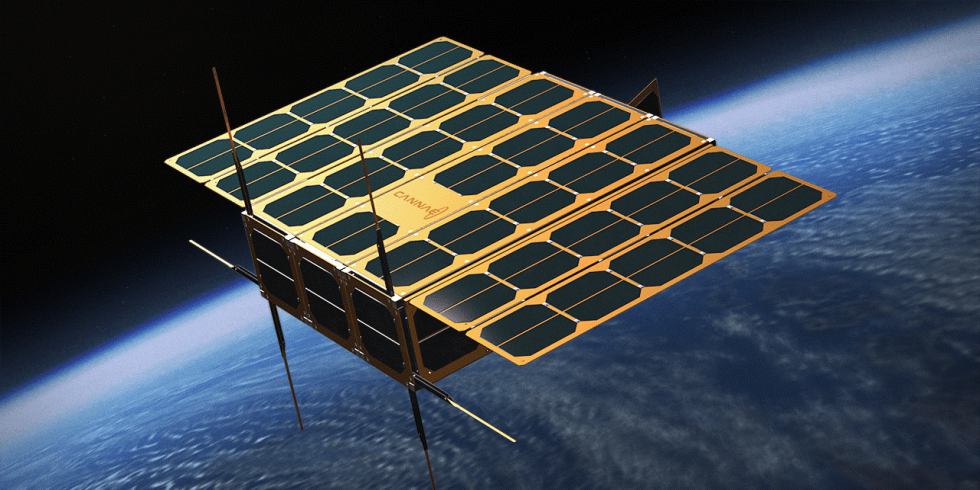
Artist impression    Cannae

Meanwhile, that pesky Emdrive just won't go away.
Infact, not only is it still confounding many (breaking laws of physics) but it is being sent into space for a ' test drive '.
The space-bound version is known as the ' Cannae Drive ', which in Scottish slang, means it's a non-starter, but hey - that's just me being facetious - ahem.
Roger Shawyer is the engineer behind this seemingly impossible drive , which is now being crowdfunded...

Even in space, you can find urban legends.
The idea of a careless employee making a gross miscalculation by using metric instead of imperial units , or vice versa, seems to be a familiar trope -
yet even in an area defined by rigorous testing and peer group reporting, myths can take hold - the report of a failed Venus probe reminds me of something I read years ago - or did I ?
Speaking of hellish planets, further pictures emerge from Juno , currently orbiting Jupiter and attempting to survive its toxic atmosphere...

Southern lights of Jupiter  ( infrared image )   NASA
On September 8th 2016, NASA hope to launch Osiris Rex, heading out to asteroid Bennu, returning with a sample in 2023.
It will be the first ever sample return mission from an asteroid, with plenty of nail-biting moments ahead.
Of course, the media angle is the THREAT to EARTH posed by the asteroid, and comparisons are already being drawn with apocalyptic films ( cue Bruce Willis in a vest gazing into the middle distance).
I laugh at such foolishness, of course, because the REAL threat is from the asteroid sample which will contain the zombie plague from space.

Sticking with the asteroid thing, we end on a high, as they found the plucky little comet- lander Philae, our ill - fated explorer !
Sadly, it's too late in the day for any meaningful contact , as the Rosetta mission draws to a close .
A call has gone up for Rosetta to target Philae when the mission ends later this month (September 2016) so they can at least be reunited for eternity, which is almost touching.
Humanising toys and animals seems to be a fairly widespread  thing, but this is way beyond that...

Still, I'll be watching.
I'll definitely say ' goodbye'
And I'll probably say aww


Monday, 18 April 2016

Cloud Cities, Dinosaurs & When Black Holes Align...


Visual of particle collsion in LHC

A theory currently doing the rounds holds that the Large Hadron Collider, in its newly turbo - charged state could be responsible for the rash of earthquakes we're experiencing lately.
I suppose it makes a change from the doom laden prophecies of gates to hell or black holes, but personally I think it's an attempt to sensationalise - as if human suffering and death wasn't enough, an unnatural explanation has to be found for tectonic activity.
Surely the logical ending of this assertion is the awakening of  Godzilla or some other  creature from the very bowels of our world ?
Anyway, I digress, but fingers are being pointed at the LHC .
Meanwhile, Cern have released 300 Terabytes of data from recent tests by the LHC for the use of any citizen scientist out there with a large storage capacity...

Another idea for consideration is the assertion that human ribs started as shark gills, which is almost certainly a theme in tales by H P Lovecraft .
Staying with the theme of the sea, a recent piece by Maddie Stone tells us a tale of Cold War paranoia, and the CIA attempting to salvage secret Russian technologies.
It's an intriguing piece, and the link is here .


Researchers are heading out for a sample.

New thinking tells us that the dinosaurs, rather than being wiped out enmasse by a comet, infact died out gradually, over millions of years, with the comet  merely serving as a full stop.
In fairness, this sounds more plausible - although I'm surprised there is not any clear evidence in the fossil record.
New evidence may be forthcoming with the imminent sample which is being taken from the Chicxulub crater ...........


Meanwhile, up on Venus...


The Venusian surface as captured by Venera 13. The probe lasted 2 hours...
We have avoided space in this post, but here's a little footnote.
There seems to be a ' buzz' around Venus at present - I'm not sure why,
Perhaps we're just jaded with all the Mars exploration.
After all , Matt Damon growing potatoes in a barren landscape may be close to reality, but it's not the exotic alien world stuff we hanker for; so there is talk of establishing cloud cities above Venus, thus avoiding the inconvenience of the molten temperatures on the surface (460°celsius), and the sulphur fumes in the air.
Anyway, wishful thinking aside, the real news is from old readings from the  ESA craft Venus Express* which discovered that Venus was colder at the Poles than we'd imagined, with temperatures dropping to - 157°c, much colder than anywhere on Earth .

Moving  further out towards Titan, it has been verified that it contains a lake of methane, with possible wetlands around its shoreline.
Covering over a million kilometres , with a depth up to 160 metres, and a slew of organic materials, it would certainly be a place to examine more closely - don't forget that the sea , known as  Ligeia Mare, is only one of three...

In the distant Kuiper Belt, it has been observed that the second largest dwarf planet Makemake has a little moon of its own, ( known as MK2 ) with a diameter of 100 miles.

Saturns moon Titan has a lake of pure methane    

Further out there...

The discovery in deep space of a series of supermassive black holes in the centre of disparate galaxies which appear to be aligned has caused uproar , defying the odds of being a random occurence, and hinting at a far larger ' structure' to the known universe.
For me this is fantastical territory, leading as it does to the nature of filaments in space , as though part of some immense neural network...just a step away from the question of intelligent design.
At present, it's still a theory until further experiments, but even so, the galaxies in question are hundreds of millions of light years apart, yet seem to follow a pattern.

Will we ever see the true nature of the scaffolding that supports the universe ?
Currently having its mirrors uncovered, our James Webb Space Telescope will see further than ever before, taking us tantalisingly close to the ' Big Bang' - well, only a few hundred million years after the event.
On that note, I take my leave -

Computer simulation of filaments and voids


*The Venus Express is now no more, but outlived its expected 500 days of  Venus monitoring , and continued exploration for a further eight years.

Friday, 20 November 2015

The New Space Race , Venusian Landers and Old Arcade Games


Space is the new Gold Rush - or at least, Wild Frontier.
In the USA, congress just passed the 'US Commercial Space Launch Competitiveness Act', which gives carte blanche to any rocket - fuelled entrepeneur seeking to mine gold in asteroids and suchlike.
We already have Dragon / Space X, but now we can add Planetary Resources, Blue Origin, and many others to the list.
Add to this, NASA are recruiting, so if you fancy being an astronaut, now is the time.
Not so much the Final Frontier as The Next Franchise then - although the lack of regulation may lead to some issues.
There is a whole subgenre of sci-fi films in which alien life forms are inadvertently brought to earth.
Perhaps we should complain, just in case.

Hubble, 25 years anniversary

In this age of online hyperbole and overused superlatives , these pretty pictures, mostly coming from Hubble, are genuinely mind - blowing .

Hercules A . Image revealed via two telescopes  ©NASA

The featured galaxy (the little white dot in the centre) is Hercules A, at the centre of which is a humungous black hole , with 2.5 billion times more mass than our sun.
Then of course, there is the distance through space in which the tails drift.
One and a half million light years, end to end.

Imagine the scene aboard a deep space craft -
"All that pinky reddishness - how much more ? "
"Oh...one and a bit million years if we maintain the current pace, travelling at 186 000 metres per second"
pause for mental calculation.
Resigned sigh.
"I'm done with pinky reddishness"

Infact, the colourful 'tail' was imaged from a radio telescope, so it is not in the normally visible spectrum for us mere mortals.
Plus, the above dialogue would never take place anyway, as Hercules A is one billion light years away,


Russia and NASA (not that NASA is a country, but really the alternative might be too shocking - yes, Russia and America, those old sparring partners of the Space Race, are to collaborate on a joint expedition to Venus - last explored by the Russian craft Venera 14* which was the first lander on another planet (for 57 minutes until it was simultaneously cooked and crushed at 865° F/ 90 x Earth Atmos ).

Fingers crossed for this bold venture.
Seems a little strange, though, particularly given that there are seemingly far more bounteous and hospitable worlds to be explored out there - but apparently they want to discover the whys and wherefores regarding Venus differing so much from Earth.
Being cynical and facetious, I hereby offer to save the billions of dollars the mission would cost by saying:
in my humble opinion, Venus differs wildly from Earth as it is much closer to an immense source of heat, and radiation .
There, puzzle solved - next?
Seriously though, it is believed in some circles that a cloud base could be created, floating above the Venusian surface, eradicating the unfortunate crushing pressure and heat (450 °C) at ground level.

Talking of probes to other worlds, here's a link to the actual descent of Huygens to Titan, one of Saturns moons. The Huygens landed in January 2005, and only lasted about an hour and a half (well, it was  -179° C , and Huygens didn't have a warm jumper), but its parent - craft, Cassini, is still up there, gathering data on the Saturn system.


Some dedicated person has created this very fab solar system infographic,free to download, laminate, and hang on the wall - ideal for any budding planetary scientist.

I'm feeling a little blank at the moment, so...
For lovers of free stuff and pointless things to do online.
Here , you can follow some retro fun links
Pointless light interplay online!
Actually, with small adjustments, you could create your own ' Dark Side of the Moon' style image...then you might want some ambient sounds to compliment it...

Retro games from this arcade online !

IN other news, the Oxford English Dictionary has declared an emoji as word of the year. the emoji signifies ' Tears of Joy' which in my book is three words, anyway. But such is the dumbing down of language. Or a universal solution to language barriers. I'm conflicted.


* There were other craft, but venera 14 was the only lander