Showing posts with label Philae. Show all posts

Saturday, 17 September 2016

Meteorites, Mini Monsters and our Moon

Largest meteorite. Hobart, Namibia      60 tonnes.         

A massive 30 ton meteorite has just been excavated in Argentina , becoming the second largest meteorite in the world.
Personally, I loved the casual nature of the video - just one digger and a smattering of applause.

Staying on the subject of large objects from space, apparently the moon was born as the result of a violent collision between Earth and a wandering planet (about the size of Mars) which resulted in a huge cloud of debris five hundred times the size of Earth which eventually coalesced into the moon as we know it.
This expansion of an old theory has been facilitated by new technology allowing for more precise readings of  moon rocks gathered by the Apollo missions.
I don't want to get bogged down with talk of Nibiru and all that, so let's move on...


What may or may not be a dinosaur 'nursery' has been discovered in the Russian Steppes , but speculation is rife as to whether the little fossil dinosaurs (one metre tall ) are infact a new species of miniature raptor.
Personally, I was most impressed by the fact that the site is only accessible by kayak , being so deep in the Steppes - I doff my cap to the intrepid palaentologists involved  - deep exploration worthy of Indiana Jones.

When ' You Are Here' means nothing...

Intrepid explorers have also ventured inside a cave which has apparently been isolated from the outside world for some 5.5 million years, give or take a few hundred thousand...
The atmosphere in Movile cave, Romania,  is toxic, being very sulphurous , and the permanent darkness and harsh conditions have led to a wealth of strange creatures, proving that life can thrive in the most inhospitable environments
Remaining in the realm of intrepid exploration, a recent survey of an extinct underwater volcano off the coast of Hawaii found  a plethora of oddities...

This lends more hope for the future exploration of places like the ice-bound and possibly waterlogged Saturnian ( is that a word ? ) moon Enceladus.

Enceladus from 30km
As we near the end of Rosettas planned mission , commemorative stuff goes into overdrive , heck you can even buy a plush version of Rosetta / Philae .
The final 'resting place' of Rosetta will be on the opposite side of the asteroid to Philae, so no 'reunited' scenario .
I remain impressed by the fact that I am alive at a time when we landed a probe on a comet - even moreso by the fact that we've been photographing and tracking it in such amazing detail for over a year
Now that the Osiris rex mission to Bennu has been launched, we will soon see the next phase, when an explorer takes a sample from a comet and returns with it...
Yay, go, science !
13 -Unlucky for some....

'Astrology is not science' is a phrase NASA had to use recently following an overly keen journalistic spin on their summary of astrology, its history and origins.
In this online world of assumptions based on half truths and third - hand hearsay, it quickly became reported as fact that NASA had added a new sign to the zodiac.

People, please !


Finally, we hear the sad story of Voyager , which collided with the end of the known universe, and received some damage as a result.
Sad to know that it will become space debris in the bottom right hand corner of the universe...




Wednesday, 7 September 2016

Exploding Payloads, Hellish Planets, Impossible Drives and The Zombie Plague From Space


It's not a great week for Elon Musk as a Space X  Falcon 9 rocket goes up in flames on the launchpad  .
He quickly moved to quash initial reports of an explosion , saying instead that it was a ' fast flame' , which led to some wag continuing the euphemism, by stating that it was a 'fast flame leading to rapid disassembly' .
No-one was hurt, but I imagine the recruitment drive for a manned flight to Mars might suffer.
Mark Zuckerberg was also dismayed as part of the payload was a satellite aimed at bringing the internet to deprived African areas.
Fortunately, there is a 'plan B' , so all should be well.

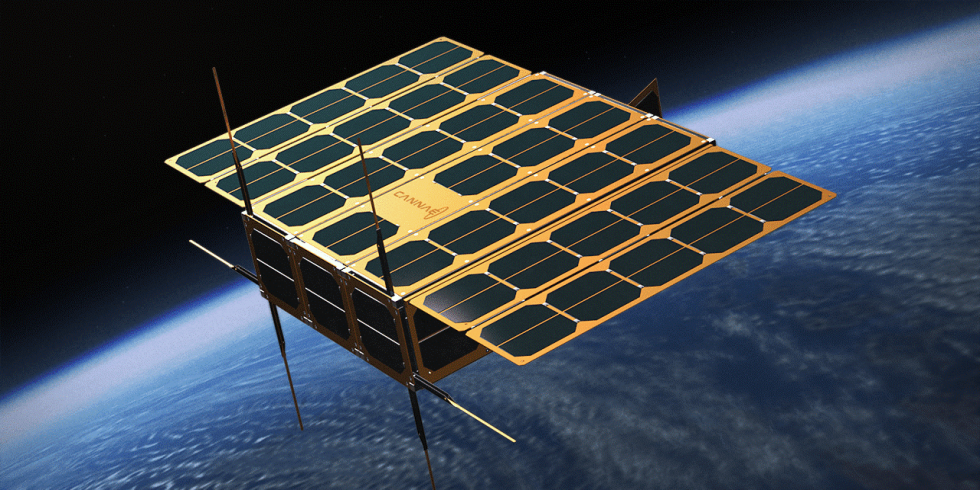
Artist impression    Cannae

Meanwhile, that pesky Emdrive just won't go away.
Infact, not only is it still confounding many (breaking laws of physics) but it is being sent into space for a ' test drive '.
The space-bound version is known as the ' Cannae Drive ', which in Scottish slang, means it's a non-starter, but hey - that's just me being facetious - ahem.
Roger Shawyer is the engineer behind this seemingly impossible drive , which is now being crowdfunded...

Even in space, you can find urban legends.
The idea of a careless employee making a gross miscalculation by using metric instead of imperial units , or vice versa, seems to be a familiar trope -
yet even in an area defined by rigorous testing and peer group reporting, myths can take hold - the report of a failed Venus probe reminds me of something I read years ago - or did I ?
Speaking of hellish planets, further pictures emerge from Juno , currently orbiting Jupiter and attempting to survive its toxic atmosphere...

Southern lights of Jupiter  ( infrared image )   NASA
On September 8th 2016, NASA hope to launch Osiris Rex, heading out to asteroid Bennu, returning with a sample in 2023.
It will be the first ever sample return mission from an asteroid, with plenty of nail-biting moments ahead.
Of course, the media angle is the THREAT to EARTH posed by the asteroid, and comparisons are already being drawn with apocalyptic films ( cue Bruce Willis in a vest gazing into the middle distance).
I laugh at such foolishness, of course, because the REAL threat is from the asteroid sample which will contain the zombie plague from space.

Sticking with the asteroid thing, we end on a high, as they found the plucky little comet- lander Philae, our ill - fated explorer !
Sadly, it's too late in the day for any meaningful contact , as the Rosetta mission draws to a close .
A call has gone up for Rosetta to target Philae when the mission ends later this month (September 2016) so they can at least be reunited for eternity, which is almost touching.
Humanising toys and animals seems to be a fairly widespread  thing, but this is way beyond that...

Still, I'll be watching.
I'll definitely say ' goodbye'
And I'll probably say aww


Thursday, 28 January 2016

The Midnight Rambler and a Cloud called Smith.


There is a cloud called Smith, and it's heading this way at 700,000 miles an hour from the distant outer edge of our galaxy.
It's a gas cloud full of cosmic chemicals, the stuff of stars.
Don't worry though, it's not due to collide with us for another 30 million years, so panic over.
I think I'll be tidying the shed that day.
By all accounts, it will be quite a sight, though, as it could give birth to up to two million stars.
I love these giant space numbers - they remind me of how insignificant I really am, in the greater scheme of things.
Enough navel gazing - the cloud was discovered by Gail Smith , hence the name.

Jupiter image ©NASA / JPL


Apparently the ancient Babylonians used algebra to plot the passage of Jupiter across the night sky, taking its origins (calculus) back some 1500 years.
My personal caution is that we are approaching 'ancient astronauts' territory here, and will next hear of the alien race who bequeathed this knowledge - puts me in mind of the claims regarding the Dogon tribe of Mali.

Remaining on the subject of possible alien interlopers, we are advised that there will be further pictures of the mysterious lights / salts in the craters of Ceres.
The Dawn mission is currently taking images from a new lower orbit of 240 miles. Images thus far look great, but the relevant ones are conspicuous by their absence.

Moscow viewed from ISS  pic ESA / 
Only last night, I saw a photo taken over Moscow which looked not unlike the Occator region - pareidolia possibly, but even so.
I'm still quietly excited.

Occator lights, Ceres   pic NASA / JPL / Caltech


There now follows a close up image of comet 67P Churyumov - Gerasimenko on which the lander Philae has apparently died a cold and lonely death, but will be joined in September when mothership Rosetta finally sets down to become one with the now famous hunk of icy rock as it continues its journey through space.
the comet was originally from the Kuiper belt, until a brush with Jupiter in 1959 knocked it out of it's orbit **, and Jupiter is where we came in, so...

Close up of comet 67P Churyumov - Gerasimenko           23 Jan 2016  ©ESA


* 'they' = the government, obv.
** which makes the comet a 'centaur' technically, as it's a hybrid.

FYI, this post was edited on Feb 5th 2016 to remove my 'midnight ramble' which frankly adds nothing to the post. Thank you all.

By the way, if anyone is wondering about my name change - it's to avoid being labelled a bot on social media - so the initials still mean 'Alias Me', ok ? Thank you !

Saturday, 4 July 2015

A Backyard Full of Flybys


Apparently there was flowing water on Mars until about 500,000 years ago.
Evidence is visible in images taken by Curiosity -
It's also what the orbiting craft Maven is looking for :
What caused the atmosphere to dissipate and the water to dry up ?


Was the planet inhabited ?
Did they leave suddenly because of drought ?
Did they come here ?
Are we the descendants of Martians ?

And why so many questions ?

Evidence of waterflow on Mars  Newton crater pic by NASA

Anyway, this idea has moved from the tin - foil realm into 'maybe' territory.
Actually it hasn't - but I like to speculate.

'Speculative fiction' seems to be a new category, although the term was allegedly coined in 1941.
This may have happened in a strange parallel multiverse, and has only now come to light.

I suppose that if the future is now, (as we frequently seem to hear ),
then speculative fiction is closer to now than science - fiction.
It sounds more plausible.
With events being 'Just around the corner'.

500,000 years ago was the last evidence of flowing water on Mars.
About the same time here on Earth, we see evidence of interbreeding in the human fossil record,
As modern man develops from diverse archaic threads...
...food for thought ?

Or just the premise for a hokey sci-fi ?

- Deep breath -

Dr David Miller, chief technological officer at NASA, says we are aiming to colonise Mars now, not
just go for a  visit.

This being the case , are we  returning en - masse to the old homeworld ?
I say 'en -masse', but it will probably be a lottery.
Or like the Hunger Game of Thrones, a fierce challenge
Winner Takes All
Survival of the fittest.


I was going to include a time-line diagram of the development of flight, but I'm no good at technical details, so -

2,400 years ago, kites were invented by the Chinese.

1783 was the year of the first hot air balloon flight (courtesy of the Montgolfier brothers).


The Wright brothers made the first manned aircraft flight in 1903.

The first moon landing was 46 years ago.

Now we are on Mars - well, a couple of robot explorers are.
Also, the lander Philae is riding a comet out there somewhere.
Our first ever landing on a comet

Comets were once considered omens, harbingers of news...

I still find it amazing to think:

We have exploration spacecraft wandering amongst the planets.
As well as Rosetta (Philae mothership),
we have the Mars Orbiter (Curiosity mothership) and Maven
Also Dawn which is orbiting Ceres
Cassini is exploring Saturn and its moons
New Horizons heading to Pluto and beyond .
And Voyager 1 & 2 which are already in the beyond...


Cassini anim using Gimp copyright NASA ?

Pictures from our very first flypast of Pluto will be here imminently.
Whilst New Horizons has been travelling,
Pluto was downgraded from Planet to dwarf planet
and upgraded to Planet again.

Whilst New Horizons has been travelling, we have seen the birth of Facebook and Twitter.

When New Horizons began its trek to Pluto, the International Space Station was not a thing.
Think about that for a moment.
The object orbiting the world with spacemen inside
Now such an everyday accepted fact,
was still in its infancy - the scheduled completion date was 2010.

In 2010, having passed Jupiter,
the New Horizons craft went into hibernation mode.
Finally, after a five year journey, it is awake again
Travelling at 32,000 mph (approximately)
We are mere days away from our first ever proper close-up sight of a world so small and so far away, that it was only discovered by its effects on other bodies.

We are closing in on the heavenly body formerly known as Planet X  (and almost named Percival )

What Pluto actually looks like will no longer be in the realms of Speculative Fiction.

So I'm quite excited...


Latest image  from Ceres showing a couple of bright spots...


P.S. Here is a link to lots of new NASA images
P.P.S. I have forgotten to mention Keppler in my rundown of explorercraft , for which I am sorry .
Keppler is drifting on a wobbly path having lost 2 of its 4 stabilisers.
It continues in its mission to detect potential habitable exoplanets in the 'goldilocks zone'.
It is now on a second mission, known as K2.