Showing posts with label Bennu. Show all posts

Sunday, 15 April 2018

Eyes on Exoworlds, Microbes in Clouds, and Hopping Robots on Asteroids


T.E.S.S. final picture before being prepped for launch
The Transiting Exoplanet Satellite Surveyor will be launched on Monday 16th April (Tomorrow as I write this, but who's counting ?)
Launching from Cape Canaveral, it will add to the search for Earth-like exoplanets currently being scoped by Hubble and Keppler.
It will bridge the (ever-increasing) gap between now and the launch of the James Webb Space Telescope

I find it both commendable but also a good deal of why?
Exoplanets are already bountiful, but the hopes of ever reaching one are painfully slim.
I suppose it helps to identify chemical composition, and make comparisons with our own backwater world. In that respect, it may further our ability to i.d. various chemical signatures in the atmosphere of impossibly distant worlds.
Recently though, Proxima B, a strong exoworld contender, has apparently been subjected to a potentially lethal dose of radiation from its parent star.

Exoplanet transit


Closer to home, we are finding tantalising possibilities of life in our own universe  - the water plumes of Enceladus and the submerged oceans of  Europa to name but two possible contenders; and now there is also the potential of microbes in the clouds of Venus.
The inhospitable surface of Venus has claimed many probes and led to the place being dubbed a hellish world, but the upper atmosphere has potential for further exporation - a floating ' cloud station' has even been mooted. There is also a pending joint America / Russia sortie ( the much delayed Venera -D)

Still remaining in our vicinity - the Japanese explorer Hayabusa 2 is on schedule to collect and return with samples from asteroid Ryugu, having already found and imaged the target - if I'm not mistaken, this is the mission with hopping robots !


Minerva - hopping robot     ISAS

The return of Hayabusa 2 is scheduled for 2020, leaving Osiris- rex lagging behind (it won't get a visual of the target asteroid Bennu until August 2018, and return is scheduled for 2023 ) - but in the spirit of international co-operation, samples will be shared between the two missions.

Apropos of nothing, here is a link to a piece I was going to use as an illustration of spacetime travel, but I ran out of time...

G

It's not just birds that can ' see' the Earths magnetic field - ESA have Swarm on the case, too


The discovery of a galaxy lacking the elusive ' dark matter' has become a contentious issue...


Monday, 6 November 2017

Sunscreen Rains , The Cameras of Mars, Rogue Worlds And Tiny Suns

I love seeing the sand dunes of Mars, frequently pictured by the MRO.

Beautiful 'linear gullies' on Mars      MRO/NASA/JPL


They  have found a giant planet orbiting a tiny sun , 600 light years away, in the obscure constellation of Columba.
What makes it notable is the bizarre scale (a planet the size of Jupiter orbiting a dwarf star so closely that its year only lasts two days)
Technically, the giant world should not exist at all, especially in such close proximity.
I favour the idea that it is a rogue world, somehow captured by the dwarf sun.
Without an observatory in my vicinity, it's guesswork, but there appear to be a few 'rogue' stars in the constellation.

The Hubble telescope just spotted an exoplanet where it rains sunscreen. At 5000 degrees farenheit, the titanium-oxide rain would hardly be protective...


There is a good deal of excitement at the latest object (A/2017 U1) spotted in our universe -mainly because it appears to have come from another solar system

Indications are that the object is red , similar to Kuiper Belt Object MU69
In which case, is mu69 from another sun , too ?
I find it oddly comforting to know that people are determined to identify and archive these things
 ( thanks to Pedro Lacerda for that link I stumbled across )
The other side of this coin is that we didn't see the asteroid coming, so there is no planned 'sortie' , Bennu style, to gather information about its composition / origins.
Researching this piece led me to this thread from Reddit, which re-affirms my faith in humanity as a curious, knowledge - hungry species...

Red asteroids don't exist- at least, in our solar system- so this points towards A/2017 U1 being an icy, KBO-like object. Why, then, didn't it develop a cometary tail as it passed by the sun? It's honestly confusing. Perhaps the billions? of years it flew through interstellar space drove away all its volatiles?
Clearly there's a lot about the surface composition of interstellar asteroids that we don't know!
[–]FaceDeer 9 points  
I'm very happy to have made it to a portion of history where investigating the composition of interstellar asteroids is a thing.

I also learned about the designation which changed from C2017 U1 to A2017 U1 - from a comet to an asteroid, as it did not exhibit a 'tail', outgassing as it passed the sun.
Apparently this unique little red rock will never pass this way again, it came in from the direction of the constellation Lyra, and was heading out towards the Kuiper Belt .


Rearview from Curiosity    NASA/JPL

23 Cameras for the next Mars Mission

In keeping with our current trend for pictures everywhere, the next Mars rover will have 23 cameras - including 3D .
Opportunity rover has a pair of B/W cameras mounted in front to produce stereo images , and another two mounted on the rear of the rover, presumably to monitor bad drivers behind.
The Curiosity rover has 17 camerasThis means that , including the MRO  and Opportunity, there are already 24 cameras on Mars - with another 23 enroute, it won't be long before we have pictures of rovers photographing rovers taking pictures of Mars...

Speaking of rovers armed with cameras,  way back in 1971, the Apollo 17 mission rover had only two cameras and even a compartment for spare film magazines- bulky payloads in the days before Micro sd cards  (although, at least they didn't get so easily lost).
Spare a thought, though, for the nightmare of moon dust in the lens...


Apollo17 Lunar Buggy with ominous ' Secondary life support system'

Please excuse the format problems, I plead ignorance of cut 'n' paste procedure.


G

Sunday, 5 February 2017

The Dunes of Mars, Bennu, Blazars and Cats in Boxes

It's official - being in space can alter your DNA !
Expect returning astronauts to resemble giant rubber - suited monstrosities of yore
Actually, nothing so dramatic, but there is evidence of unexpected alterations .
This could have major implications for long, manned journeys - to Mars, for instance.
Speaking of which, a recent image shows the dunes in the northern hemisphere of Mars - fun facts; whilst perusing the photos, I became aware that there are different kinds of dune - I am guilty of thinking how one pile of sand was pretty much like another.

Mars - Pahrump Hills - Curiosity                  pic NASA /JPL-Caltech


The image below had me confused for some time, and shows the problem of pictures without objects of reference for scale ; to be fair, Mars is rather short of monuments and landmarks to judge scale by - I thought that this was just a close up of a dry riverbed with cracked mud...but apparently some of the thin ridged areas are 16 storeys high.

Mars image by HI RISE        NASA/ Caltech / University of Arizona
A new test for biosignatures has been developed, which is 10,000 times more sensitive than those onboard Curiosity.
The article which mentions this discovery also name-checks Europa as a suitable target for testing, In preparation of which, this piece describes a proposed lander for Europa .
Personally, I'm disappointed that it looks so - underwhelming.


The tiny blue smudge in the centre is our solar system...

The illustration above shows our solar system compared to the largest black hole yet found.
Don't fret, it's not actually swallowing us - it is 12.1 billion light years away , thankfully.
Of course, given its immense size and the voracious appetite of black holes, it may well munch its way here, like a giant Pacman*...
This supermassive black hole is part of an immense quasar - if it were 280 light years away from us, it would give us heat equivalent to the sun.
I am now feeling small and insignificant , still banjaxed by all the big numbers involved , so in order to preserve my sanity, I will extricate myself from the event horizon of this monstrosity (diameter of 236.7 billion kilometres)


In a previous post , I mentioned the exciting project which would use lightsails powered by sunlight to achieve incredible speeds reaching 20% the speed of light, and enabling exploration of Alpha Centauri within a mere 20 years.
The caveat to that was the lack of a braking system - obviously a craft travelling at 60,000 km/s without brakes could have a problem with landing...
It turns out they have worked out a way to slow the craft down - although this will also affect the overall speed, bringing it down to a 95 years journey rather than a mere 20 years, so it becomes a generational thing.
Which means if you're travelling with Virgin Galactic , don't get a return.
Unless they solve longevity, too.
Which maybe connected to this earlier piece.
Longer telemeres, longer life ?

More immediate space exploration is the Bennu mission which aims to return sample material from an asteroid to Earth, with contact planned for 2018.
The Bennu-Rex explorer is also tasked with discovering whether Earth has any 'trojan' asteroids following its orbit.
This could unlock details of our distant past , as potential asteroids would likely be composed of material dating from Earths creation.
This little ' side-mission' is happening now ( Feb 2017)


If, like me, you've been struggling to understand quantum mechanics, there is now  a Ladybird guide to the strange , but inevitable realm.
Before you ask, the answer is no - I still don't understand it .
Cats in boxes ?
Yes - and no.
At the same time.
That's quantum .


Until next time, keep it ...erm...in a state of flux.


* Showing my age here, is Pacman still a thing ?

Wednesday, 7 September 2016

Exploding Payloads, Hellish Planets, Impossible Drives and The Zombie Plague From Space


It's not a great week for Elon Musk as a Space X  Falcon 9 rocket goes up in flames on the launchpad  .
He quickly moved to quash initial reports of an explosion , saying instead that it was a ' fast flame' , which led to some wag continuing the euphemism, by stating that it was a 'fast flame leading to rapid disassembly' .
No-one was hurt, but I imagine the recruitment drive for a manned flight to Mars might suffer.
Mark Zuckerberg was also dismayed as part of the payload was a satellite aimed at bringing the internet to deprived African areas.
Fortunately, there is a 'plan B' , so all should be well.

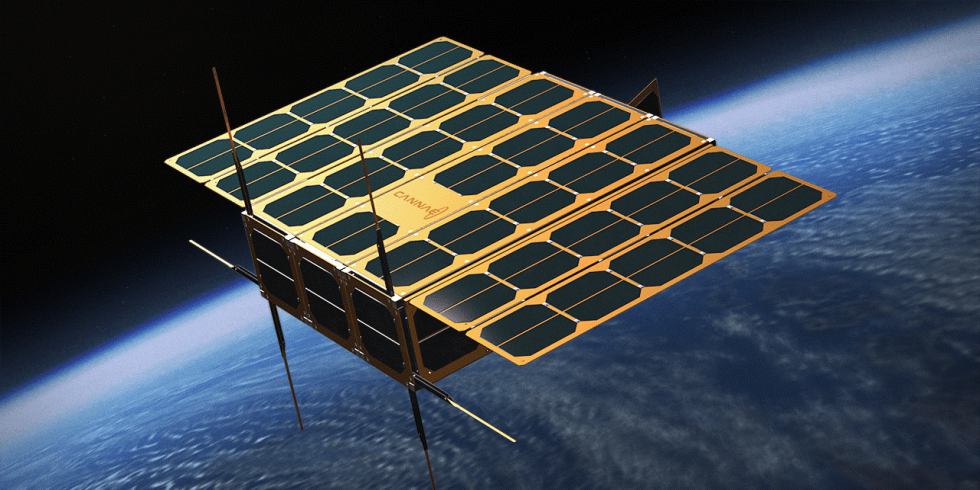
Artist impression    Cannae

Meanwhile, that pesky Emdrive just won't go away.
Infact, not only is it still confounding many (breaking laws of physics) but it is being sent into space for a ' test drive '.
The space-bound version is known as the ' Cannae Drive ', which in Scottish slang, means it's a non-starter, but hey - that's just me being facetious - ahem.
Roger Shawyer is the engineer behind this seemingly impossible drive , which is now being crowdfunded...

Even in space, you can find urban legends.
The idea of a careless employee making a gross miscalculation by using metric instead of imperial units , or vice versa, seems to be a familiar trope -
yet even in an area defined by rigorous testing and peer group reporting, myths can take hold - the report of a failed Venus probe reminds me of something I read years ago - or did I ?
Speaking of hellish planets, further pictures emerge from Juno , currently orbiting Jupiter and attempting to survive its toxic atmosphere...

Southern lights of Jupiter  ( infrared image )   NASA
On September 8th 2016, NASA hope to launch Osiris Rex, heading out to asteroid Bennu, returning with a sample in 2023.
It will be the first ever sample return mission from an asteroid, with plenty of nail-biting moments ahead.
Of course, the media angle is the THREAT to EARTH posed by the asteroid, and comparisons are already being drawn with apocalyptic films ( cue Bruce Willis in a vest gazing into the middle distance).
I laugh at such foolishness, of course, because the REAL threat is from the asteroid sample which will contain the zombie plague from space.

Sticking with the asteroid thing, we end on a high, as they found the plucky little comet- lander Philae, our ill - fated explorer !
Sadly, it's too late in the day for any meaningful contact , as the Rosetta mission draws to a close .
A call has gone up for Rosetta to target Philae when the mission ends later this month (September 2016) so they can at least be reunited for eternity, which is almost touching.
Humanising toys and animals seems to be a fairly widespread  thing, but this is way beyond that...

Still, I'll be watching.
I'll definitely say ' goodbye'
And I'll probably say aww