Sunday, 17 September 2017

Cassini, Future Missions, And The Paradox of Time-Travel


Jean Dominique Cassini 1625-1712 first discovered four of the moons of Saturn


Cassini is no more, a moment I watched with a glass of Absinthe - the cloudy liquid resembled the swirling atmosphere of Saturn - that was my excuse, anyway.
It lent a strange ambience to the last hour of the mission, and I sensed the bittersweet feels of those who had spent so much time on the amazing voyage of discovery.
But enough - I could go on at length, about how its discoveries had been attended and enabled by so many dedicated people that it really felt like the perfect antidote to world-weariness, how it left me with a sense of pride in the potential of our eternal curiosity, and thirst for knowledge.
With this in mind,further missions to Saturn and its moons are being considered, with two contenders earmarked for Titan and Enceladus, the possible life - bearing moons.
Here is a link to a pdf of the Cassini legacy
Sadly, the next proposed launch to Saturn is a few years away - but don't forget Juno is in orbit around Jupiter*, the next Mars probe will leave next year, and Bennu / Osiris- Rex is also already underway-the daring mission to collect and return with a sample from an asteroid.
Don't wait up for the sample - it won't be back on Earth until 2023.

Goldstone, which rec'd the signals from Cassini

Speaking of distant worlds (okay, that's a tenuous link), in a turnaround for the world of radio telescopes, it has been determined that Earth is in the visual sightline of at least nine exo-worlds, so they could be watching us...**
Pointless trivia perhaps, but it shows the sort of thing that occupies the mind of bored scientists.

Intrepid engineers at the University of New South Wales have developed the 'flip-flop' quantum qubit, which could be controlled electrically rather than magnetically, allowing for the speedy development of silicon - based quantum computers.
The most impressive aspect for me is the fact that the entangled particles can be manipulated whilst remaining entangled.

I decided that the occupants of the ISS are technically, time- travellers.

It transpires that time travel is possible, but only forward, really (to avoid all those pesky paradoxes  - as explored in films like Back To The Future- i.e.if you went back in time and killed your grandfather, then you would not be born so you couldn't travel back in time, etc)
To keep everything tidy, then, only future time travel is allowed.
Except, apparently, if you could manipulate a wormhole - then it would be theoretically possible to travel back in time, but only as far back as the beginning of the wormhole.
Could quantum entanglement be used to create a nano-wormhole between two entangled particles ?
I decided that whilst it may be possible in the quantum realm, it could never be upscaled for common use.
Then it was time to lie down quietly in a darkened room...


Until next time

G


* Jean Dominique Cassini was also first (with Robert Hooke) to observe the Great Red Spot on Jupiter

** It has already been pointed out to me that they would be looking at dinosaurs. Thank you, Pedantic Interwebbers


Monday, 11 September 2017

Countdown For Cassini, Plumes on Enceladus, And The Pale Blue Dot


The Countdown for Cassini nears its end - only a few days now to its 'Grand Finale' , following an epic twenty years of exploration in the Saturnian system, and some truly amazing finds-
as well as releasing the furthest ever man- made probe to land on another world (when Huygens landed on Titan), Cassini has also relayed a treasure trove of new knowledge about the mysterious gas giant and its moons - eye opening stuff, like the amazing plumes of water on Enceladus - tantalising and interesting enough to have sparked further exploration
The proposed Enceladus Life Finder- ELF mission is a possible contender in 2020 - the other being LIFE, which is intended to bring samples back to Earth - but we all know how that plays out......

Cassini dived through the water plumes on Enceladus in 2015

Not to be out done (by themselves), NASA simultaneously released the news that the Hubble telescope had seen water plumes on Jupiters moon Europa.
The legacy of Cassini will be covered in its final moments, more thoroughly than I can, so I will restrain myself from further outpourings - but I am proud and humbled to see such wonders in the heavens - proof of what can be achieved when humanity sets aside the petty politics and squabbles that consume so much energy.
The final 'swan-song' dive will furnish us with further science, and for that, I am grateful.

It's forty years for the two Voyager craft in space, and with Voyager1 now travellimg outside our solar system (40,000 yrs until the next star) , it's up to New Horizons to clinch the next rendezvous as it fast approaches the mysterious object MU69 - ok, so fast is relative with MU69 penciled in for a flyby in 2019, but in space terms, that's soon.
It also promises to be the closest flypast yet.

The journey of the Voyagers has blazed a trail, forcing us to upgrade our listening capabilities as they get further away, and let's not forget that the Voyager craft also produced the first images of planets in our solar system that were more than fuzzy blobs - and also the famous image of Earth known as the 'pale blue dot', taken by Voyager One in 1990:

'The Pale Blue Dot' -    Feb 14 1990  NASA/JPL


Sunday, 3 September 2017

The Asteroid With Two Moons, Water On Mars, Distant Sounds, and The Octopus Invasion


A couple of days ago, a large asteroid named Florence flew past Earth, frighteningly close.
I didn't panic though as ' frighteningly close', in space/media terms is apparently 4.4 million miles away.
Phew, huh?
The media made much of the fact that it was the largest ever asteroid to pass by so close, and no doubt, some cultists and survivalists prepared for the Endtimes.
NASA even got footage that shows the asteroid had two moons !
I never thought that an asteroid would have any form of moon, but I suppose it depends on the size of it, and the strength of its gravity/magnetic core.

In other news, a further cluster of radio signals known as FRBs have been detected .
Emanating from the source FRB121102, a galaxy some 3 billion light years distant, the significance and origins are unknown - although one fanciful idea is that they represent the launch of deep space craft.
If that is true, then they left when our world was just beginning to host single - celled life forms...
by my own calculations, if they have been able to maintain their course, then technically, they are here already.
In which case, our only hope of survival is that they forgot why they left their home galaxy 3 billion years ago.


Meanwhile, in the rings of Saturn...

We are getting close to what's billed as the 'Grand Finale' , when Cassini plunges into the atmosphere of Saturn , bringing to an end its incredible voyage of discovery.
I shall be watching on September 15th, until we lose contact.
I'll miss the news from Cassini.

Is it a thing that we now humanise robot explorers ?
I feel a simiar empathy with Curiosity.
I remember the tense landing, billed as 'seven minutes of terror'.
Since then, I've been acutely aware of the reality of the lonely rover which is tirelessly cataloguing the environs, atmosphere and geology of Mars

Lest we forget:     Image from Opportunity           Sol 4824

Curiosity even has its own Twitter feed (shameless plug also for the Sarcastic Rover, which blends world - weary cynicism with wry political comment).
As well as Curiosity, let's not forget Opportunity , still trundling around Mars, long after landing on the 'Red Planet'.
Landing in 2004, both Opportunity and the Spirit rover had a projected three months of exploration on Mars.
Spirit lasted six years, and Opportunity, not to be upstaged by Curiosity, is still trundling around the Endeavour crater.
The next Mars launch will be Mars Insight, a static explorer tasked with sub-surface examination, which will launch in May 2018, followed by the Exo-Mars rover in 2020.
It's all systems go for Mars, we'll soon have many explorers / orbiters in action there, spurred on by the fact that water, one of the key ingredients for life, has been spied on Mars.
Let that sink in.
'briny water-flow' on a Mars hillside    NASA/ JPL / Caltech / Univ. of Arizona


Meanwhile, back on Earth...++++++++++++++++++++++++++++++++++++++++++++++++++++++++++++++++


The largest x-ray machine in the world recently started up in a 38 mile complex of tunnels beneath Hamburg.
Boasting 37,000 pulses a second, it will be used to examine the process of photosynthesis, unravelling the mystery of how light becomes energy - also how antibiotics are formed, and what happens deep inside the sun.

Apparently, octopus (octopi?) are taking over the worlds oceans 
On the subject of water, scientists have apparently succeeded in quantum communication in sea-water.
Okay, so the test was only over a ten foot distance, but even so ...


Sunday, 27 August 2017

The Conspirati Walk Among Us !


Clearest image of a star that is not our sun  Betelguese - Xavier Haubois


CONSPIRACY-A-GO-GO !

In the spirit of the age ( looking at you, Flat - Earthers, Creationists, etc), I have come over all conspiratorial  - did you know that members of ESA  recently took part in a sea - training exercise in China ?
All very innocent I'm sure, but is this not preparation for landing on a watery moon- looking at you, Europa - and Ganymede, Titan and Ceres , and possibly our very own moon...
On a similar conspiracy tip, it seems that getting Information under the FOIA from NASA is virtually impossible.
Well, what do you expect - after all, they must be too busy answering queries about how they are hiding SOMETHING
Something BIG, like:
Where does the money come from to allow them to have a rover wandering around the Nevada desert all day ?
I THINK WE SHOULD BE TOLD*


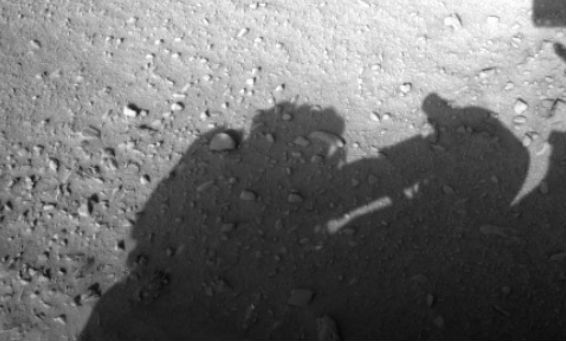
Man in spacesuit working on Curiosity - online PROOF   (of pareidolia)

It's okay - I took my meds now ... sorry if that reference triggered anyone.

Ahem

It's odd that, as our understanding of the world and the universe around us advances, we seem to regress.
Is there a comfort zone where we can all remain in denial ?
If so, why ?
After all, what is frightening about the fact that a black hole can delete the universe ?

In the interest of a peaceful conclusion to the sheer terror of the UNKNOWN
Here is a link to a universe simulation thing


* It appears that, yes, we are actually exploring Mars, and the Conspirati are devoting themselves to pareidolia, seeing (ludicrously small) people in the debris-strewn landscape (and the occasional alien crab / squirrel).
Keeps 'em quiet, I suppose...

Monday, 21 August 2017

Eclipse, Distant Probes And The Vanishing UV On Venus


Eclipse spex from 1932


Okay, so this post is happening out of sync, but this is often the case in life - today is the day when a total solar eclipse is occuring from coast to coast in the USA, so happy viewing !


London eclipse viewing 1927

In other news, Elon Musk joins over a hundred 'robotics experts'* warning of the dangers of autonomous killer AI, as we head blindly into a future where 'The Terminator' is more than just a movie...I touched on this in a post I made in 2015

* I tried to get clarification, apparently there are over 100 AI and Robotics Experts, but no further details.
Sadly, no advice on how to actually become an 'expert' in the field of robotics.
I'm sure that my past experience with models of Robby the Robot , Gort, Maria from Metropolis, and a Dalek should count...
( pause for a moment as I am corrected that Daleks actually contain biological entities therefore don't count unless you include 'synths' like the 'replicants' from Bladerunner)

Maria - technically a replicant, for pedants of robotics

Meanwhile, far out in space...

Yesterday was the fortieth anniversary of the launch of Voyager 2 - Voyager 1 was launched on September 5th , so the official celebrations are next month.
The reason for the lack of orderly sequence was due to Voyager1 being sent on a different trajectory.
This links to a nice piece about those who are still tracking the intrepid Voyagers - which are not due anywhere near another star for 40,000 years...don't wait up


NASA will soon launch a probe tasked with discovering the nature of exactly what is absorbing UV light in the upper atmosphere of Venus - personally, I think aliens love a bit of blacklight rave...


Sunday, 13 August 2017

Clockwork Rovers, Missing Chunks, And The Pending Eclipse


To address the problem of electronics frying in the heat of the Venusian surface, JPL have created an entirely clockwork rover.
This instantly conjures images of a 'Steam-punk' contraption exploring a distant world.
Sadly, the actual design is purely functional, looking like a table with treads, and without the extra gears and embellishments associated with Steampunk (although another prototype appears to have 'spider-legs').
Still, the principle is there, and operating in temperatures of almost 500 degrees c, the risk of warped and damaged parts would be too great...

'Table on Treads' Venus rover mock-up      ©JPL

Since 1994, Venus has been neglected in favour of the exploration of Mars and the outer worlds of our solar system.
Even so, NASA have earmarked money for a mission which may be a joint effort with Russia, whose Venera13 was the last mission to send full colour images from the surface of Venus.
As Venus is close in size and mass to Earth, it may give us valuable information about climate and other mysteries ; one of which is why does it have such a thick atmosphere ?
The thick, hazy atmosphere is partly the reason for a probe being necessary - but it's also the reason for the surface being hotter than Mercury .
As we found with Magellan, it's impossible to clearly see the surface of Venus from above.
On the other hand, if it all looks like this, then we're not missing much...

Venus viewed by Venera 13 . Homely place...      

In Other News...

Let's just take a moment to remember that the plucky New Horizons probe is out there, travelling at over 30,000 mph towards a rendezvous with Kuiper Belt Object MU69.
The latest news tells us that MU69 may be multiple objects, or, rather oddly, just one with a chunk bitten out of it.
I'm conflating and exaggerating, of course, but how else do I make this update interesting ?

Meanwhile, back on Earth...

You may notice that I have barely mentioned the pending Stateside eclipse - not intentionally, although I am a little jealous - the last full eclipse I saw was in London long ago, in 1999...I'd like to say that I 'partied like it was 1999', but ironically, I was working underground at the time, and had to come to the surface just to watch the sky darken...

Eclipse 1999                           picture by Jurgens Mandeldorf

I'm pretty sure that this once in a lifetime total eclipse is well documented elsewhere, I'm sure there will be attempts to follow the progress coast -to -coast, but at only two minutes in each area, that would be a fast road trip !


Saturday, 5 August 2017

Jumping Lunar Bots, And The Methane Seas of Titan

The mystery 'island' on Titan 

Recent news of complex, possibly life - capable molecules in the upper atmosphere of Titan got me a little excited.
Putting two and two together, and making five, I remembered a brief flurry of interest when images emerged of a vanishing something in the hydro-carbon sea of Ligeia Mare.
This was made even more intriguing by a documentary* about Titan which , in the final moments (start viewing at approx 35.24), examines micro-organisms thriving in Pitch Lake in Trinidad , the  closest thing on Earth to the hydrocarbon / methane lakes of Titan (minus the below- freezing temperatures).
 In the film,Dr Sarah Hörst replicates the conditions of the Titan atmosphere, successfully creating four major components of DNA, and a Dr McKay postures that life in such a nutrient - poor environment may take the form of a large, thin mat, maximising surface area...

Another anomaly on Titan is the cloud which shouldn't exist ( by our understanding, anyway)
These discoveries, and many more, were made by Cassini, the intrepid little probe that's been examining the Saturn system for twenty years ( and makes its final swan dive through the rings of Saturn next month).
The 'impossible cloud' , Titan      image  NASA/ JPL
I feel humbled, remembering the hugely impressive feat of the ESA probe Huygens being sent from Cassini down to the inhospitable surface of Titan in 2005, where it lasted just over an hour.
It remains our furthest landing on a planet in the solar system to this day.
Okay, there was the comet too, but that was just passing through, right ?
We are now agog at the wonders of Enceladus and Europa , both of which appear to contain large amounts of water, and great potential for life - or at least pre-biotic** conditions
Regardless of the possible existence of strange hydro-carbon based life forms , the sheer wealth of information gathered by Cassini has greatly increased our understanding of the Saturn system, and I will be drinking a farewell toast when it finally descends into the Saturnian depths...


Meanwhile, closer to home, a recent competition has resulted in the creation of jumping lunar nanobots.


The article speaks of profitability and rugged design, but I know that secretly, we're gearing up for nano-robot races on the moon !

Coming Soon - for those in the U.S.A. Once in a lifetime total eclipse of the Sun on the 21st August! To be extensively covered by NASA, I just leave this link here


*  Thanks to PlanetDr / SarahHörst for the link

**This seems to be the new buzzword